














Skip to content
Nanosphere insulation for façades and existing buildings

One coating.
1 millimetre.
Instead of 15 to 20 centimetres of polystyrene.

PowerSmartCoat is rolled or sprayed on rather than fixed, and raises the interior wall temperature above the mould-risk threshold. Window reveals, roller shutter boxes and façade profiles keep their existing dimensions — orderable from 50 m².

What does it cost?

What PowerSmartCoat does for your building

  • Reduce heating costs
  • Increase fire protection
  • Prevent mould
  • Heat protection in summer
  • Protect surfaces
  • Protect the roof
Product properties

Why nanosphere insulation?

Four properties set the coating apart from classic insulation systems: thermal conductivity, U-value, surface temperature and vapour permeability. What each one means for your building is explained below.

Around 1 mm already achieves what a classic ETICS build-up needs about 15–20 cm of polystyrene for.

System selection

Which system fits?

Three details are enough to work out the material required. Add the recommendation to the order below with a single click.

Desired insulation level

This requirement is a guide value for a smooth substrate. Texture, absorbency and application method change it; it only becomes binding once tested on a sample area on the original substrate.

Facade packages

Four levels, four insulation goals

Which level fits depends on what the building needs to achieve. The first three include the material for the complete build-up; the fourth also includes application by a specialist contractor.

A residential building whose left half is rendered as a thermos flask — the coating keeps the warmth inside the building instead of making the wall thicker.

Orderable from 1 m² per level. Orders below 50 m² are dispatched from the Ketsch warehouse: €20 shipping per part or full 18 m² container plus an €18 decanting fee. From 50 m² we deliver free of charge ex works. Prices per square metre of facade, including VAT. The first three levels cover the material without application; PScoat Komplett includes application by a specialist contractor and is billed after measurement. The U-values apply to the respective system build-up and are not a guarantee for a specific existing building component — the U-value of your wall is determined by the complete build-up.

Order package Enquire about a build-up for your property

Difference from classic insulation

What makes us unique

Nano-ceramic technology for insulation performance with minimal material use.

  • Only a few millimetres of coating thickness
  • Vapour-permeable – water can escape
  • Hydrophobic – water does not penetrate
  • Simply applied instead of elaborate installation
  • Perfect for existing buildings
  • No joints, no thermal bridges
5.000.000 m²+
Over 5,000,000 m² successfully coated
38 countries
Regular deliveries to 38 countries
10 years +
Over 10 years of experience
From the field

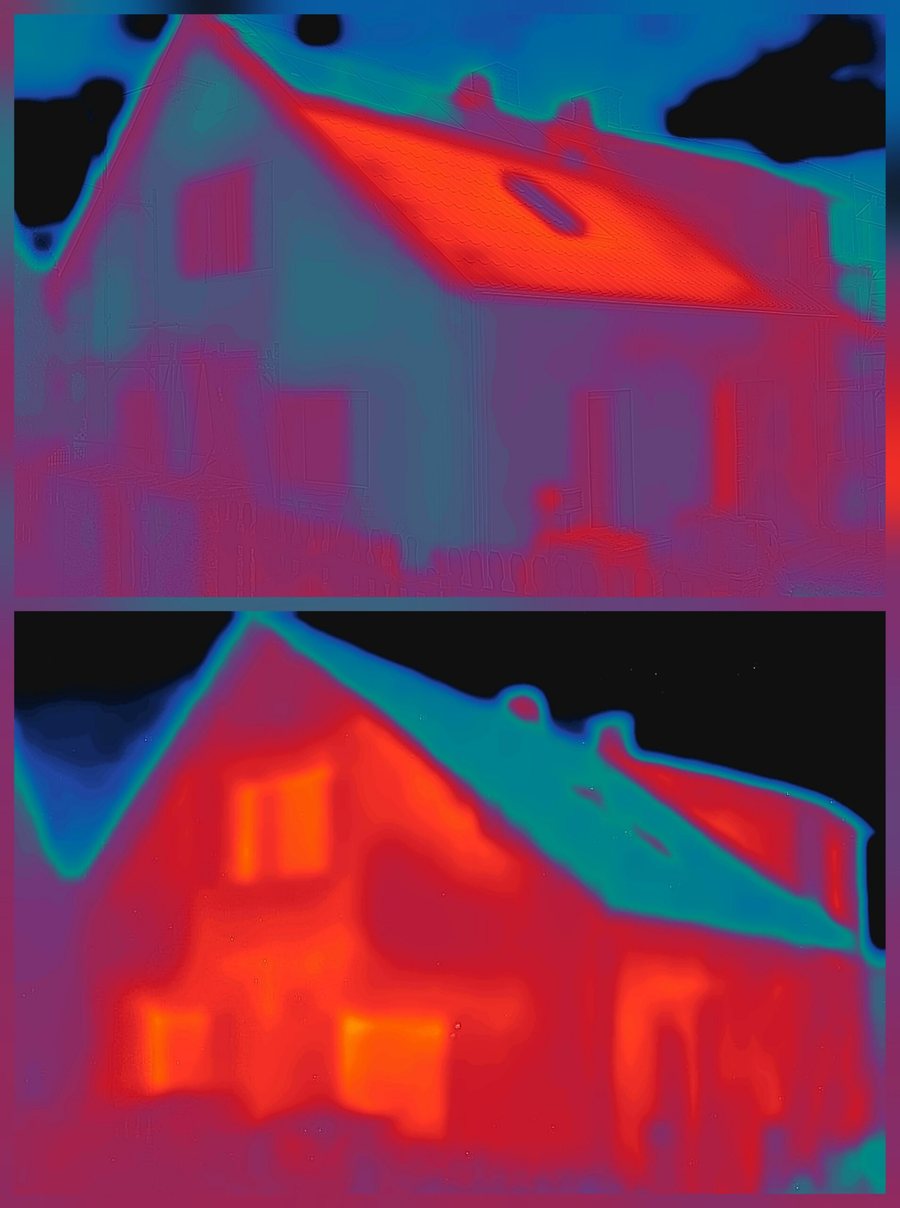
This is what the difference looks like

A residential building before and after coating, captured with a thermal imaging camera.

Two thermal images of the same residential building, one above the other, before and after coating

Residential building, built 1890

Outdoor temperature
2 °C / 5 °C
Room temperature
20 °C
Wall surface before
12 °C
Wall surface after
19 °C

Before: high heating output and still no satisfactory room temperature.

Annual heat demand fell from around 40.000 kWh to below 15.000 kWh.

Performance figures in detail

What lies behind the four figures

Lambda value λ

Thermal insulation

The exceptionally low lambda value applies to the coating material itself. It describes the thermal conductivity of the layer, not the U-value of the finished component — that is determined by the entire wall build-up.

Basis System data PSC 250 T

U-value W/(m²·K)

Energy efficiency

In the system build-up examined, the coating achieves a U-value of 0.1. This figure applies to this specific build-up and is not a guarantee for any given existing component — that requires a calculation for the actual building.

Basis System build-up, component examined

Surface °C

Prevention of condensation

After application, the interior-facing surface stays just below room temperature and thus well above the dew point and mould criterion. This is precisely the figure behind the component cross-section on the "How it works" page.

Basis Field measurement on site

µ-value

Vapour permeability

A µ-value of 220 allows water vapour to escape, so the component build-up can dry out. Interstitial condensation must be assessed independently in accordance with DIN 4108-3.

Basis System data PSC 250 T

From the field

Customer experiences

Businesses that have worked with the coating — in their own words.

Thanks to the coating, we were able to raise the interior temperature of an office from 6–12°C to 19–21°C with the same heating output. This meant the poorly insulated room could be used again.

Rewe GroupOffice building project

The straightforward application and the impressive results convinced us. Our customers are delighted.

Schmidt & SohnSpecialist application contractor

Measurement series and documented studies

Nanosphere insulation for façades and existing buildings

One coating. 1 millimetre. Instead of 15 to 20 centimetres of polystyrene.

PowerSmartCoat is rolled or sprayed on rather than fixed, and raises the interior wall temperature above the mould-risk threshold. Window reveals, roller shutter boxes and façade profiles keep their existing dimensions — orderable from 50 m².

Contact

Questions about your building?

Tell us what you have in mind — area, year built, condition of the façade. You'll get an assessment back, not a sales loop.

  • Reply within two working days.
  • A build-up proposal for your property on request.
  • Free and non-binding.

Your enquiry

Fields marked with * are required.